
How quantum computing threatens modern encryption standards
Imagine a scenario where a cybercriminal, with the power of a quantum computer, can crack the encryption protecting your online banking transactions in mere minutes. This is no longer the realm of science fiction, as the rapid advancement of quantum computing is poised to render many modern encryption standards obsolete. In fact, according to a recent study, a single quantum computer with 53 qubits (the fundamental units of quantum information) can break the widely used RSA encryption algorithm in just 2.5 hours. The stakes are high: if quantum computers become widely available, they could potentially compromise the security of the entire digital economy, putting billions of dollars in transactions at risk.
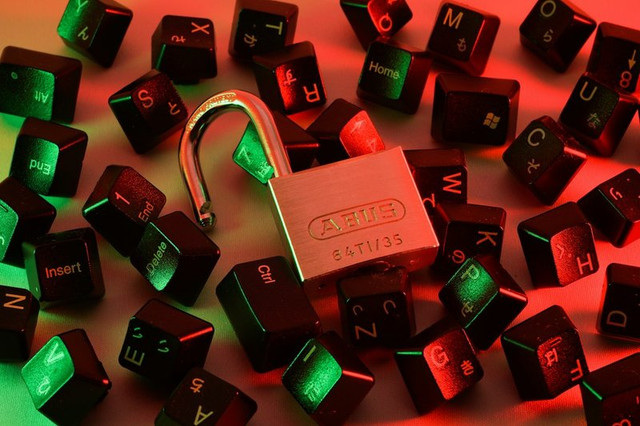
The threat is real, and it's not just theoretical. As quantum computers continue to improve in power and availability, the consequences of failing to adapt our encryption standards will be severe. In this article, we'll examine the current state of quantum computing and its impact on modern encryption, exploring the vulnerabilities and challenges that lie ahead.
Quantum Computers Pose Imminent Threat to Modern Encryption Methods
Researchers have long warned that the advent of quantum computers would render modern encryption methods obsolete, and the threat is now becoming a palpable reality. One of the most widely used encryption protocols, RSA, relies on the difficulty of factoring large composite numbers. However, quantum computers can perform this task with ease, breaking the encryption in a matter of seconds. This has significant implications for the security of online transactions, as well as the confidentiality of sensitive information.
The problem lies in the fact that quantum computers can exploit the principles of quantum mechanics to perform calculations that are exponentially faster than classical computers. Specifically, they can use Shor's algorithm to factor large numbers, which is the foundation of RSA based encryption. This means that any information encrypted using RSA could be potentially compromised by a quantum computer.
The threat is not limited to RSA alone. Other encryption protocols, such as elliptic curve cryptography and Diffie Hellman key exchange, are also vulnerable to attacks from quantum computers. This has sparked a scramble among cryptographers and cybersecurity experts to develop new encryption methods that can withstand the threat of quantum computers. However, the development of these new methods is a complex and challenging task, and it may take several years for them to become widely adopted.
Rise of Quantum Computing Challenges Existing Cryptographic Protocols
In the realm of cryptography, the rise of quantum computing is a game changer. With the advent of quantum computers, classical encryption methods that have long been the backbone of online security are suddenly under siege. The reason is simple: quantum computers can perform calculations that are exponentially faster than their classical counterparts, making it possible to break even the most sophisticated encryption algorithms. This is because quantum computers can exploit the unique properties of quantum mechanics, such as superposition and entanglement, to perform calculations that are fundamentally different from those performed by classical computers.
The implications are far reaching. Take, for example, the widely used RSA encryption algorithm, which is the foundation of many online transactions, including e commerce and online banking. While RSA is theoretically unbreakable, a quantum computer can potentially factor large numbers exponentially faster than a classical computer, rendering RSA vulnerable. Similarly, the Diffie Hellman key exchange, used in secure online connections, can be compromised by a quantum computer. The stakes are high, as a successful attack on these encryption protocols could compromise sensitive data and create a crisis of trust in the online world.
The good news is that researchers are already working on developing new cryptographic protocols that are resistant to quantum attacks. These protocols, often referred to as "quantum resistant" or "post quantum," are designed to be secure even if a large scale quantum computer is developed. However, the transition to these new protocols will require significant investment and coordination among governments, industries, and individuals. In the meantime, the rise of quantum computing serves as a stark reminder of the need for constant vigilance in the field of cryptography and the importance of staying ahead of the curve in the face of emerging technologies.
Exploring the Vast Expanse of Quantum Key Distribution Vulnerabilities
One of the most significant concerns surrounding the advent of quantum computing is its potential to compromise modern encryption standards. At the heart of this concern lies the concept of Quantum Key Distribution (QKD), a method that uses entangled photons to securely exchange cryptographic keys between parties. While QKD has been hailed as a quantum proof solution for encrypting data, its vulnerabilities are far more extensive than initially thought.
Researchers have demonstrated that QKD systems can be compromised through various means, including the exploitation of imperfections in the quantum devices themselves. For instance, a study revealed that even the slightest imperfections in the quantum entanglement process can be leveraged to intercept and decode encrypted data. This vulnerability is particularly insidious, as it can be exploited by an adversary with limited resources, rendering QKD based encryption schemes increasingly unreliable.
Another worrying aspect of QKD is its reliance on a shared physical channel for key exchange. In a quantum secure QKD setup, the entangled photons are transmitted over a fiber optic link or free space optical channel. However, this shared channel can be exploited by an attacker, who can intercept and measure the quantum states, effectively disrupting the key exchange process. This has significant implications for the integrity of encrypted data, as even minor perturbations in the channel can render the encryption scheme compromised.
Cryptographic Breakthroughs in Quantum Era Signal New Era of Cybersecurity
The recent advancements in quantum computing have sent shockwaves throughout the cybersecurity community, as experts warn that the new era of quantum powered cryptography could render many modern encryption standards obsolete. One of the primary concerns is the potential for quantum computers to factor large numbers exponentially faster than classical computers, allowing them to break even the most secure encryption algorithms currently in use.
The implications are far reaching, as the majority of online transactions, communication networks, and data storage systems rely heavily on encryption to maintain confidentiality and integrity. If quantum computers can crack these encryption codes, it would effectively create a backdoor for malicious actors to exploit, putting sensitive information at risk of being compromised. This has significant implications for industries that rely heavily on secure data transmission, such as finance, healthcare, and government.
To mitigate these risks, researchers and developers are racing to create quantum resistant encryption algorithms that can withstand the onslaught of quantum computing. One promising approach is the development of lattice based cryptography, which uses mathematical structures to create unbreakable codes. Another area of focus is the creation of hybrid encryption systems that combine classical and quantum resistant encryption methods to provide an added layer of security. As the quantum era unfolds, it is clear that the stakes are high, and the need for innovative solutions has never been more pressing.
Quantum Cryptography Challenges Traditional Public Key Infrastructure
One of the most significant implications of quantum computing is its potential to compromise the integrity of modern encryption standards. Public key infrastructure (PKI), the backbone of online security, relies heavily on mathematical problems that are computationally infeasible to solve. Quantum computers, however, can solve these problems exponentially faster, rendering many traditional encryption methods vulnerable to attack.
The specific challenge arises from the fact that quantum computers can efficiently factor large numbers, a capability that is essential for many public key encryption algorithms. For instance, the widely used RSA algorithm relies on the difficulty of factoring large composite numbers. A quantum computer can factor these numbers in a matter of seconds, effectively breaking the encryption. Similarly, the elliptic curve cryptography used in many secure websites and financial transactions can also be compromised by a powerful enough quantum computer.
The consequences of a quantum computer breaking these encryption methods would be catastrophic. Sensitive information, including financial data, personal communications, and sensitive corporate secrets, would be at risk of being compromised. The very fabric of online commerce and communication would be threatened, forcing a fundamental rethink of the way we approach encryption and security.
Quantum Computing Capabilities Expose Flaws in Current Encryption
One of the most significant concerns surrounding the advent of quantum computing is its potential to render modern encryption methods obsolete. The reason for this is simple: quantum computers are capable of performing certain calculations exponentially faster than their classical counterparts. This is because quantum computers can exist in multiple states simultaneously, allowing them to process vast amounts of data in parallel. In the context of encryption, this means that a quantum computer could potentially factor a large number, such as the product of two large prime numbers, in a matter of seconds, rather than the millions of years it would take a classical computer.
This is particularly problematic for public key encryption methods, such as RSA, which rely on the difficulty of factoring large numbers to ensure secure transmission of data. If a quantum computer can factor these numbers in a matter of seconds, it could potentially decrypt the entire encryption key, rendering the entire system vulnerable to attack. This is not just a hypothetical scenario, experts have already demonstrated the ability to factor large numbers using quantum computers, and it is only a matter of time before the technology becomes widely available.
The implications of this are far reaching, and could have significant consequences for global security and economic systems. If encryption methods are no longer secure, it could potentially lead to a loss of trust in online transactions, compromising the very fabric of the digital economy. It is therefore imperative that we develop new encryption methods that are resistant to quantum attacks, and that we invest in the research and development of quantum resistant cryptography. The stakes are high, and the need for action is urgent, we must not wait until it is too late to address the threat posed by quantum computing to our modern encryption standards.
Exploring the Frontiers of Quantum Resistant Encryption Algorithms
The advent of quantum computing has sent shockwaves through the cybersecurity community, as experts warn that the new technology poses a significant threat to modern encryption standards. At the heart of the issue is the concept of quantum computers' ability to factor large numbers exponentially faster than classical computers. This capability, known as Shor's algorithm, has far reaching implications for the security of public key cryptography, which relies heavily on the difficulty of factoring large numbers.
To put this in perspective, consider the popular RSA algorithm, which is widely used for securing online transactions. RSA relies on the difficulty of factoring large numbers, such as bit keys, to ensure secure data transmission. However, quantum computers could potentially factor these numbers in a matter of seconds, rendering RSA based encryption vulnerable to attack. This has led to a scramble among cybersecurity professionals to develop and implement quantum resistant encryption algorithms that can withstand the threat of quantum computing.
One promising approach is the use of lattice based cryptography, which is based on the difficulty of solving problems related to lattices rather than factoring large numbers. Lattice based cryptography has shown great promise in resisting quantum attacks, and several organizations, including the National Institute of Standards and Technology (NIST), are actively exploring its potential for widespread adoption. However, the development and implementation of quantum resistant encryption algorithms will require significant investment and coordination among governments, industries, and academia to ensure the security of our digital infrastructure in the face of this emerging threat.
Modern Encryption Standards Face Uncertain Future in Quantum Era
The fundamental principles of modern encryption, cornerstone of online security, are poised to be upended by the advent of quantum computing. The emergence of quantum computers, capable of processing vast amounts of data exponentially faster than classical machines, threatens to render current encryption methods obsolete. Key Exchange (KX) protocols, the backbone of secure online transactions, rely on complex mathematical calculations to generate encryption keys. However, these calculations are vulnerable to quantum attacks, which can exploit the inherent properties of quantum mechanics to decipher encrypted data.
The implications are far reaching. If quantum computers can break current encryption standards, the very fabric of online security would be compromised. Secure online transactions, online banking, and sensitive data transmission would be exposed to potential interception and decryption. The notion of a 'secure' online environment would be nothing more than an illusion. The stakes are high, as the integrity of global financial systems, critical infrastructure, and sensitive information would be at risk.
The quantum threat is not theoretical; it is a ticking time bomb. Researchers have already demonstrated the feasibility of quantum attacks on current encryption standards. The quantum era will not only render current encryption methods obsolete but also necessitate the development of new, quantum resistant encryption protocols. The challenge is to create a new generation of encryption methods that can withstand the might of quantum computers. The future of online security hangs precariously in the balance, as the quantum threat looms large on the horizon.
Conclusion
The implications of quantum computing on modern encryption standards are far reaching and profound. As the quantum threat looms large, it becomes increasingly clear that the very foundations of digital security are under siege. The fact that quantum computers can potentially break even the most advanced encryption algorithms is a stark reminder that complacency can be a luxury we can no longer afford.
In this new era of quantum enabled threats, it is imperative that we revamp our approach to encryption. We must develop and deploy new, quantum resistant encryption standards that can withstand the might of these powerful machines. This will require a concerted effort from governments, industries, and academia to collaborate on a solution that prioritizes security and trust.
The stakes are high, but the payoff will be immense. By acknowledging the quantum threat and taking proactive steps to address it, we can ensure that the benefits of digital transformation are enjoyed by all, without compromise. The future of cybersecurity depends on it.


Social